


Blog
Medical Dressing Silicone Adhesive: Applications and Sourcing Guide for Buyers

Medical dressings are expected to remain securely attached while minimizing discomfort to the skin. For procurement teams, this creates an important sourcing challenge: the adhesive must provide reliable fixation without causing excessive pulling, irritation or residue during removal.
Medical dressing silicone adhesive is widely used in skin-contact products because it can be formulated to provide soft adhesion, flexibility and gentle removal. It is commonly applied in foam dressings, scar-care products, silicone contact layers and other medical products that require repeated or prolonged contact with the skin.
However, not all silicone adhesives perform in the same way. Adhesion strength, coating stability, substrate compatibility, curing conditions and regulatory documentation can vary significantly between suppliers and formulations.
This guide explains how silicone adhesives are used in medical dressing production and what purchasing teams should evaluate before selecting a material.
What Is Medical Dressing Silicone Adhesive?
Medical dressing silicone adhesive is a soft, skin-contact silicone material designed to bond a dressing or medical product to the skin.
Unlike many conventional pressure-sensitive adhesives, soft silicone adhesives can be formulated to maintain contact with the skin while reducing excessive stripping of the outer skin layer during removal.
In a typical dressing structure, the silicone adhesive may be coated onto:
- Polyurethane film
- Thermoplastic polyurethane film
- Foam material
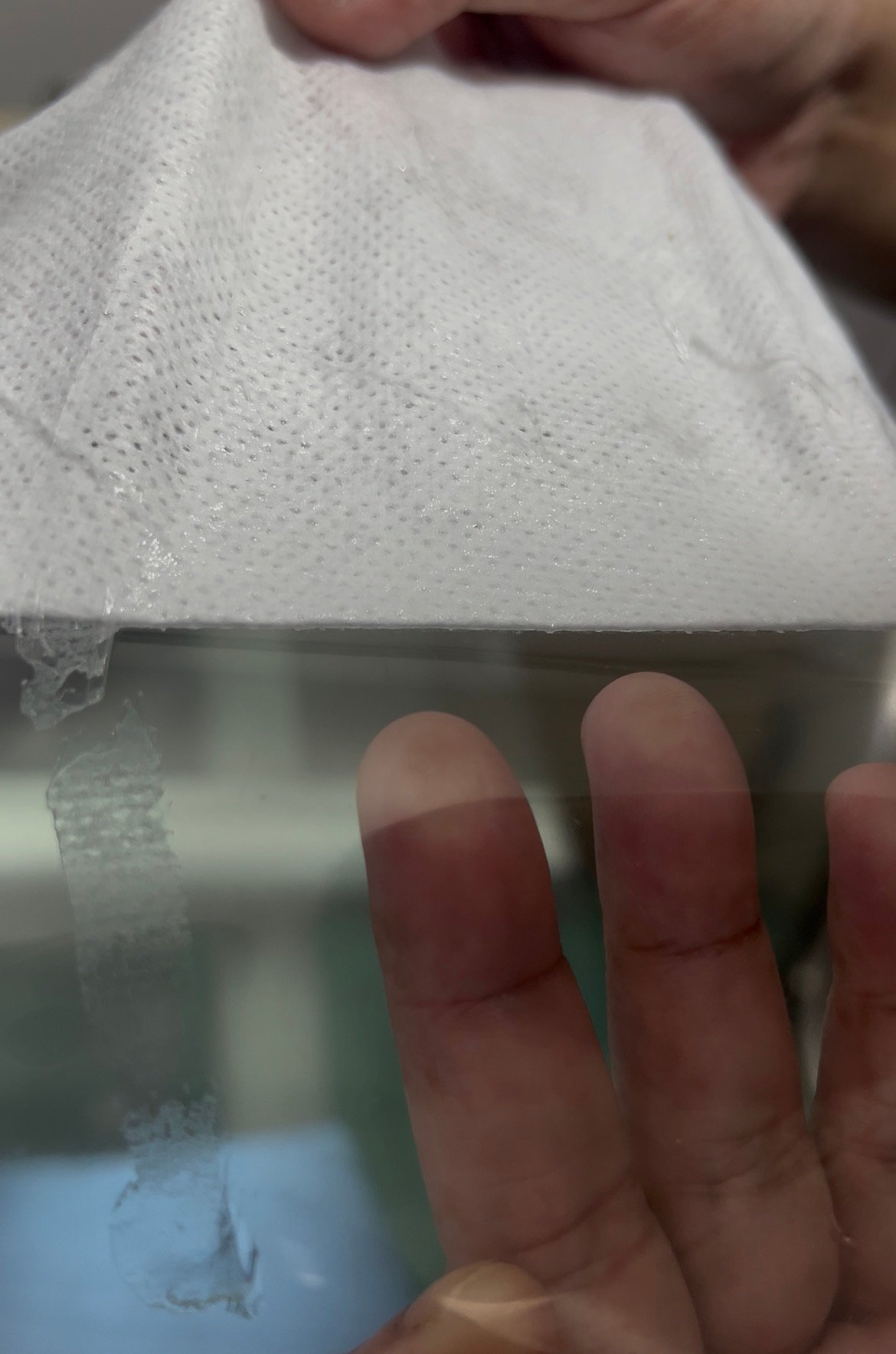
- Nonwoven fabric
- Release liner
- Silicone contact layer
- Transfer coating film
Depending on the product design, the silicone may be coated directly onto the final substrate or first applied to a release liner and then transferred to another material.
The complete performance of the dressing depends not only on the silicone adhesive, but also on the backing film, foam, release liner, coating thickness and curing process.
Common Applications of Silicone Adhesive in Medical Dressings
1. Foam Wound Dressings
Foam dressings are commonly used to manage wound exudate and protect the wound area.
A silicone adhesive layer can be applied to the skin-contact side of the foam dressing or to a supporting film. The adhesive helps keep the dressing in position while allowing it to be removed more gently.
For foam dressing manufacturers, the silicone must provide:
- Stable adhesion to the skin
- Uniform coating
- Good compatibility with foam and film materials
- Flexible performance after curing
- Controlled release from the protective liner
Uneven coating or unsuitable silicone viscosity may cause inconsistent adhesion across the dressing surface.
2. Silicone Contact Layers
A silicone wound contact layer is designed to sit directly over or around the wound area.
The silicone surface helps the dressing remain in place without strongly attaching to the wound bed. Depending on the product design, perforations may be included to allow fluid to pass into an absorbent secondary layer.
For this application, manufacturers need to carefully control:
- Silicone softness
- Surface tack
- Coating thickness
- Perforation structure
- Release liner compatibility
- Curing conditions
3. Scar-Care Patches and Silicone Sheets
Silicone materials are also used in scar-care patches and reusable silicone sheets.
These products often require a balance between adhesion and repositionability. The patch should remain attached during use but should not feel excessively aggressive when removed.
Important purchasing considerations include:
- Repeated adhesion performance
- Resistance to edge lifting
- Surface cleanliness
- Flexibility
- Long-term tack stability
- Compatibility with the carrier film or fabric
4. Skin-Contact Fixation Products
Soft silicone adhesives may also be used in medical fixation products that require direct skin contact.
These products can include fixation patches, wearable medical accessories and other devices that must remain attached without creating excessive stress on sensitive skin.
The adhesive requirements will depend on the intended wear time, application area, movement of the skin and product structure.
Why Manufacturers Use Soft Silicone Adhesives
Gentle Removal
One of the main reasons manufacturers select silicone adhesive is its potential to provide gentler removal compared with more aggressive adhesive systems.
This is particularly important for:
- Sensitive skin
- Elderly patients
- Pediatric products
- Repeated dressing changes
- Fragile or compromised skin
The exact skin performance must still be verified through appropriate product testing.
Flexible Skin Contact
Silicone adhesives remain soft and flexible after curing. This allows the adhesive layer to move more naturally with the skin and the dressing substrate.
Flexibility is especially important when the dressing is used on curved or moving areas of the body.
Adjustable Adhesion
Silicone adhesive formulations can be adjusted according to the required level of tack, peel strength and softness.
For example, a short-wear fixation patch may require a different adhesive profile from a reusable scar-care sheet or a foam wound dressing.
This is why buyers should avoid selecting silicone based only on price or general product descriptions.
Suitable for Precision Coating
Medical dressing silicone can be processed through different coating methods, including direct coating and transfer coating.
When the viscosity and curing system are properly matched to the production equipment, the silicone can form a smooth and consistent skin-contact layer.
Key Specifications Buyers Should Evaluate
Procurement teams should evaluate both material performance and production compatibility before approving a silicone adhesive supplier.
1. Adhesion to Skin
The adhesive should provide enough tack to keep the product in place for its intended use.
However, stronger adhesion is not always better. Excessive tack may make removal uncomfortable or cause damage to fragile skin.
Buyers should communicate the following information to the silicone supplier:
- Intended wear time
- Target application area
- Whether the product is reusable
- Required repositionability
- Target peel strength
- Skin sensitivity requirements
2. Coating Viscosity
Viscosity affects how the silicone flows, levels and remains on the substrate during coating.
If the viscosity is too low, the material may flow beyond the intended coating area. If it is too high, the coating may become uneven or difficult to process.
The correct viscosity depends on:
- Coating equipment
- Coating speed
- Target thickness
- Substrate structure
- Direct or transfer coating process
- Production temperature
A qualified supplier should evaluate the actual production process rather than recommend a material based only on the final application.
3. Coating Uniformity
Uniform coating is essential for stable adhesion.
Variations in coating thickness may result in:
- Uneven tack
- Localized edge lifting
- Visible surface defects
- Poor release liner performance
- Inconsistent product quality
Buyers should request coating trials and inspect the silicone layer for bubbles, particles, streaks and thickness variation.
4. Curing Temperature and Time
Silicone adhesives require suitable curing conditions to achieve their final performance.
The selected temperature and curing time must be compatible with the substrate. Some PU or TPU films may shrink, deform or change performance when exposed to excessive heat.
Before production, buyers should confirm:
- Recommended curing temperature
- Minimum curing time
- Maximum substrate temperature
- Film shrinkage after heating
- Whether post-curing is required
- Whether the process is continuous or batch-based
A higher temperature may shorten curing time, but it must not damage the film, foam or release liner.
5. Substrate Compatibility
A silicone adhesive that performs well on one film may not provide the same result on another substrate.
Common medical dressing substrates include:
- PU film
- TPU film
- Polyethylene film
- Foam
- Nonwoven fabric
- Silicone-treated release paper
- PET release film
Buyers should provide actual substrate samples for compatibility testing whenever possible.
Testing should evaluate bonding, coating appearance, curing stability and release performance.
6. Release Liner Performance
The release liner protects the adhesive layer before use.
If the liner release force is unsuitable, it may be difficult to remove or may separate prematurely during converting and packaging.
Buyers should test the silicone together with the intended release paper or release film rather than testing the adhesive separately.
7. Mixing and Processing Ratio
Many medical dressing silicone adhesives are supplied as two-component systems.
The A and B components must be mixed at the correct ratio. Inaccurate mixing may lead to:
- Incomplete curing
- Unstable tack
- Surface stickiness
- Reduced shelf performance
- Variation between production batches
Production teams should use calibrated weighing and mixing equipment and follow the supplier’s recommended processing instructions.
8. Bubbles and Contamination
Air bubbles, dust and foreign particles can create visible and functional defects in the adhesive layer.
Depending on the coating process, vacuum degassing may be required after mixing.
The production environment, mixing tools and coating equipment should also be kept clean to reduce contamination risk.
9. Technical and Compliance Documentation
For medical dressing projects, buyers should confirm which technical and compliance documents are available.
Common documents may include:
- Technical Data Sheet
- Safety Data Sheet
- Certificate of Analysis
- Restricted substance information
- Quality management certificates
- Skin-contact or biocompatibility test reports
- Batch traceability records
- Material composition declarations
The documentation required will depend on the destination market, final product classification and internal quality system.
A raw material document does not replace testing and certification of the finished medical device.
Direct Coating vs. Transfer Coating
Direct Coating
In a direct coating process, silicone adhesive is applied directly to the foam, film or other final substrate.
This method can simplify the production structure, but the substrate must tolerate the coating and curing conditions.
Direct coating is suitable when:
- The substrate is dimensionally stable
- The surface accepts the silicone coating
- The curing temperature is compatible
- The equipment can control coating thickness accurately
Transfer Coating
In transfer coating, the silicone is first coated and cured on a release carrier. The cured adhesive layer is then transferred or laminated onto the final substrate.
Transfer coating may be preferred when:
- The final substrate is sensitive to heat
- A smoother adhesive surface is required
- The substrate is difficult to coat directly
- The production line uses lamination
- Precise coating thickness is important
The silicone formulation must be specifically evaluated for the selected transfer coating process.
Raw Silicone Adhesive or Pre-Coated Material?
Buyers may source either liquid silicone raw material or a pre-coated roll material.
Liquid Silicone Raw Material
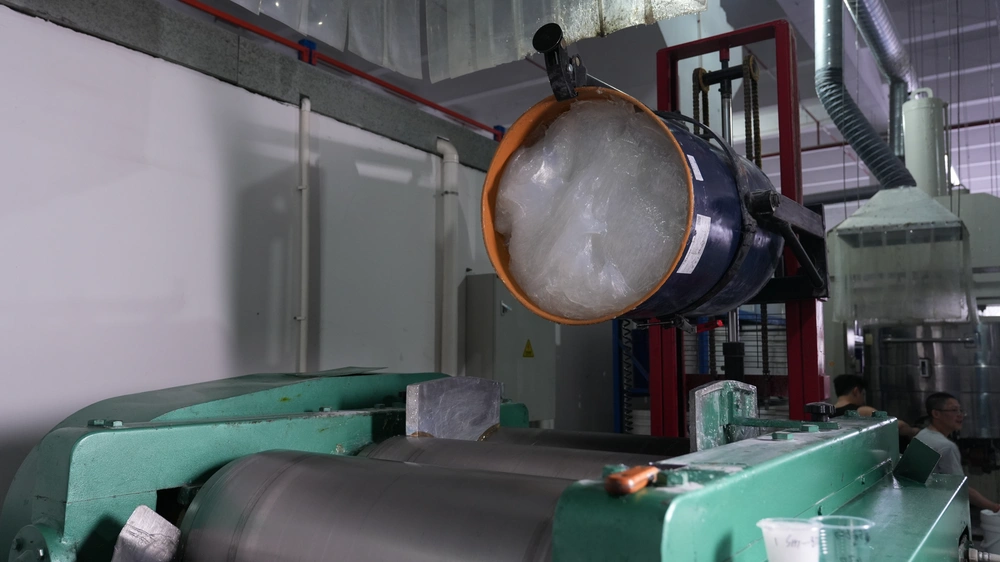
Liquid silicone is suitable for manufacturers with their own mixing, coating, curing and quality-control capabilities.
It provides greater control over:
- Coating thickness
- Product dimensions
- Adhesion level
- Substrate selection
- Production cost
- Product customization
However, the manufacturer must have appropriate equipment and technical experience.
Pre-Coated Roll Material
Pre-coated material may include silicone adhesive, film and release liner in a ready-to-convert roll format.
This option can reduce coating complexity and shorten product development time.
It may be more suitable for buyers that focus on die-cutting, perforation, lamination and final product assembly rather than silicone coating.
Before requesting a quotation, buyers should clearly specify whether they require:
- Liquid silicone adhesive
- Silicone-coated PU or TPU film
- Perforated silicone adhesive roll material
- Release liner and other individual raw materials
This prevents misunderstandings during supplier evaluation.
Common Sourcing Mistakes
Choosing Only by Price
Lower-priced silicone may have different filler content, coating stability, curing behavior or skin-contact performance.
The true cost should include:
- Material usage per square meter
- Defect rate
- Production efficiency
- Batch consistency
- Required rework
- Customer complaints
- Technical support
Testing Without the Actual Substrate
Testing silicone on a generic film does not confirm compatibility with the final dressing structure.
The supplier should test the actual PU film, TPU film, foam, nonwoven or release liner whenever possible.
Ignoring Production Conditions
A laboratory sample may perform well under ideal conditions but behave differently on a production line.
Buyers should provide information about coating speed, oven length, curing temperature, mixing equipment and target thickness.
Approving a Material Without Batch-Control Requirements
Medical product manufacturers require stable production quality.
Before approval, buyers should evaluate:
- Batch-to-batch consistency
- Raw material traceability
- Quality-control process
- Shelf life
- Storage requirements
- Packaging format
- Change-control procedures
Questions to Ask a Medical Silicone Adhesive Supplier
Before starting a project, procurement teams should ask:
- Is the silicone designed for skin-contact applications?
- What adhesion range can the formulation provide?
- Is it suitable for direct coating or transfer coating?
- What curing temperature and time are recommended?
- Can it be used with PU film, TPU film, foam or nonwoven materials?
- What mixing and degassing equipment is required?
- Can the formulation be adjusted for different tack levels?
- Which technical and compliance documents are available?
- Can the supplier test the buyer’s actual substrate?
- Are free samples available for laboratory and production trials?
- What is the standard lead time?
- How does the supplier control batch consistency?
Clear answers to these questions help reduce development delays and material-selection risks.
Silicone Adhesive Solutions from Chengyin Silicone
Chengyin Silicone supplies liquid silicone materials for medical dressings and other skin-contact applications.
Our silicone adhesive solutions can be evaluated for applications such as:
- Foam dressings
- Skin-contact adhesive layers
- Scar-care products
- Silicone adhesive films
- Transfer coating processes
- Other flexible medical dressing structures
Different formulations are available according to adhesion, softness, coating process and substrate requirements.
For new projects, our technical team can review:
- Product structure
- Substrate type
- Coating method
- Target coating thickness
- Curing conditions
- Required adhesion
- Release liner
- Finished product requirements
Samples can be provided for testing before bulk purchasing. Buyers are encouraged to test the silicone together with their actual film, foam and release liner.
Frequently Asked Questions
Is silicone adhesive suitable for sensitive skin?
Soft silicone adhesives are commonly selected for products intended to provide gentler skin contact and removal. However, the finished product must still complete the appropriate skin-contact and biocompatibility testing for its intended use.
Can silicone adhesive be coated onto PU film?
Yes, silicone adhesive can be evaluated for coating onto PU film. The film’s surface properties, heat resistance, shrinkage and coating process must be tested before production.
Can silicone adhesive be used with TPU film?
It may be suitable for TPU film, but compatibility depends on the specific TPU formulation and curing conditions. Actual material testing is recommended.
What curing temperature is required?
The appropriate curing temperature depends on the silicone formulation and substrate. Buyers should follow the supplier’s technical instructions and verify that the film or foam can tolerate the selected conditions.
Is medical dressing silicone supplied as one or two components?
Many liquid silicone adhesives are supplied as two-component systems. The components must be mixed accurately before coating and curing.
Can the adhesion strength be customized?
In many cases, the formulation can be adjusted according to the required tack, softness, peel performance and application structure. The supplier will need information about the final product and production process.
Can silicone adhesive be used for transfer coating?
Yes, but the silicone must be evaluated specifically for transfer coating. The release carrier, curing conditions, lamination process and final substrate all affect performance.
Should buyers test samples before placing a bulk order?
Yes. Sample testing allows buyers to evaluate adhesion, coating quality, curing, substrate compatibility and liner release before approving the material for production.
Conclusion
Medical dressing silicone adhesive is not a one-size-fits-all material.
The correct adhesive must match the dressing structure, substrate, coating equipment, curing process, required wear time and skin-contact performance.
For procurement teams, the most reliable sourcing process is to provide the supplier with actual application information, conduct tests using the final substrate and evaluate both technical performance and supplier quality systems.
A well-matched silicone adhesive can help manufacturers achieve more stable coating, consistent adhesion and a better user experience in the finished medical dressing.
Looking for silicone adhesive for a medical dressing project?
Contact Chengyin Silicone and share your product structure, substrate, coating process and target adhesion. Our technical team can recommend a suitable material and arrange samples for testing.