Blog
EN 388 Testing Explained: Abrasion Resistance and Mechanical Protection for Gloves

Protective gloves are widely used in industrial manufacturing, construction, logistics, and other environments where hands are exposed to mechanical risks.
For glove manufacturers, durability, abrasion resistance, and grip performance are important considerations when selecting materials.
EN 388 is a European standard used to evaluate the mechanical protection performance of safety gloves. Understanding this standard can help manufacturers develop gloves that meet different application requirements.
1. What Is EN 388?
EN 388:2016+A1:2018 specifies testing methods and performance levels for protective gloves against mechanical risks.
The standard covers six performance indicators:
- Abrasion Resistance: Resistance to repeated rubbing and surface wear.
- Blade Cut Resistance: Resistance to cutting by a circular blade.
- Tear Resistance: Resistance to tearing forces.
- Puncture Resistance: Resistance to penetration by a standardized probe.
- TDM Cut Resistance: Cut resistance measured according to EN ISO 13997.
- Impact Protection: Optional testing for gloves designed to provide impact protection.
Each test evaluates a different mechanical property. A higher performance level indicates greater resistance to the corresponding hazard under the specified test conditions.
2. EN 388 Abrasion Resistance Test
Abrasion resistance is particularly important for work gloves that frequently contact rough surfaces.
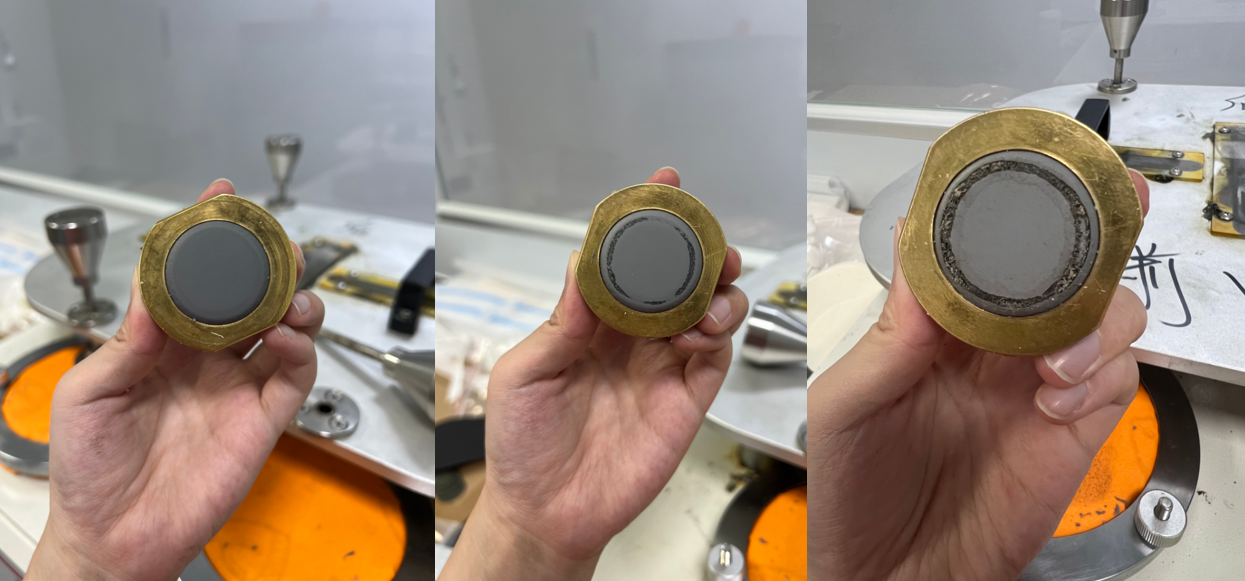
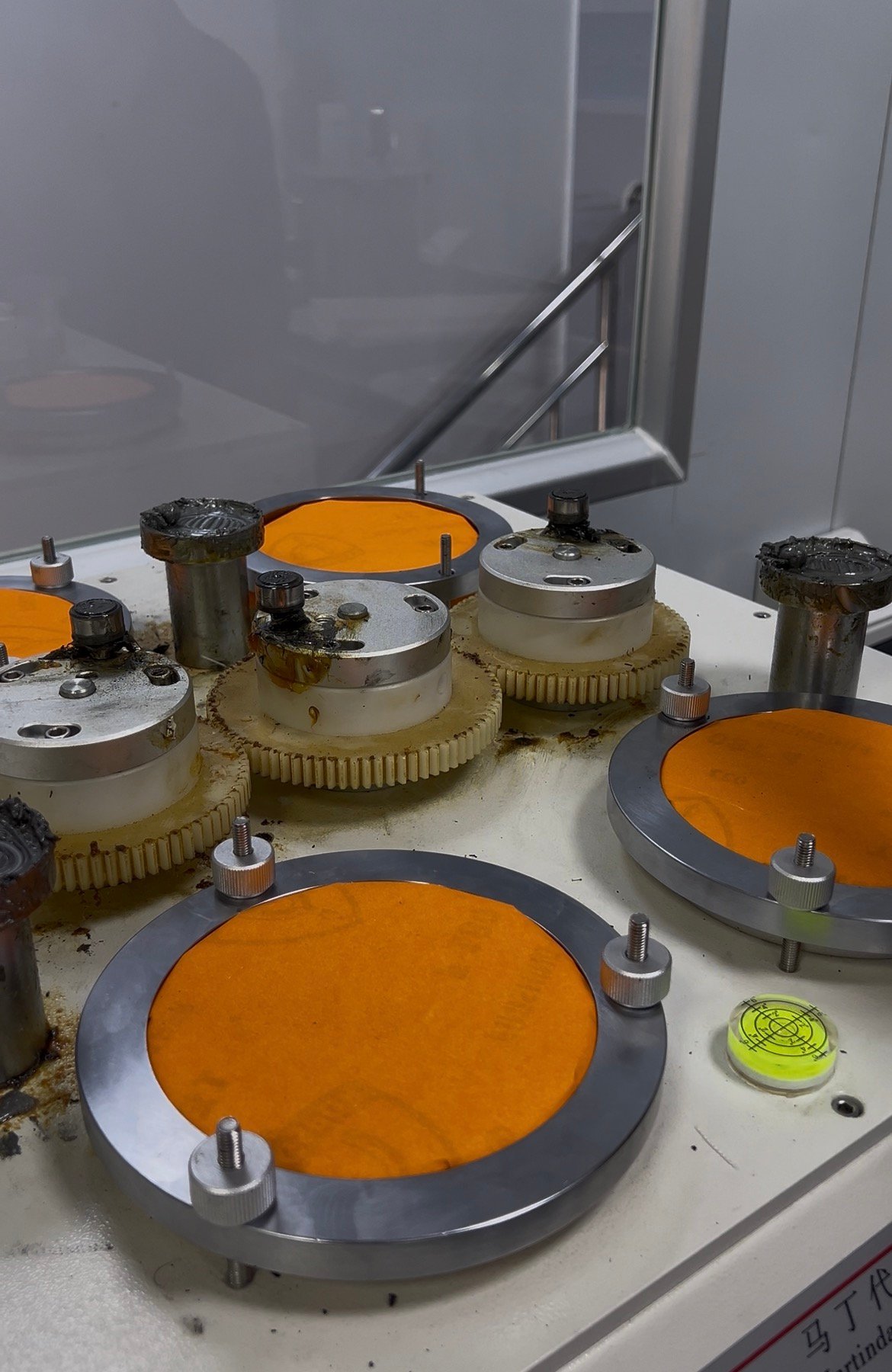
Under EN 388, samples taken from the glove palm are tested using a Martindale abrasion testing machine.
The samples are rubbed against standardized abrasive material under controlled conditions. The test measures how many rubbing cycles are required to wear through the glove material.
The abrasion resistance levels are classified as follows:
| Performance Level | Abrasion Cycles |
|---|---|
| Level 1 | ≥ 100 |
| Level 2 | ≥ 500 |
| Level 3 | ≥ 2,000 |
| Level 4 | ≥ 8,000 |
Level 4 represents the highest abrasion resistance classification under EN 388.
However, the result applies to the tested glove construction, not automatically to an individual coating material.
3. Other Mechanical Performance Tests
In addition to abrasion resistance, EN 388 evaluates several other mechanical properties.
Cut Resistance
The standard includes a circular blade cut test and an ISO 13997 straight-blade test. The latter uses performance levels from A to F.
Tear Resistance
This test measures the force required to tear the glove material. Performance is classified from Level 0 to Level 4.
Puncture Resistance
This test measures the force required for a standardized probe to penetrate the glove material. Performance is also classified from Level 0 to Level 4.
These tests help manufacturers evaluate different types of mechanical protection.
4. How Does Silicone Printing Relate to EN 388 Testing?
Silicone printing is used in certain textile glove applications to create raised patterns and anti-slip surfaces.
Depending on the formulation and printing design, silicone patterns can provide textured contact surfaces and influence gripping performance.
However, EN 388 does not directly assign a grip-performance rating to silicone printing.
For gloves incorporating silicone printing, manufacturers should consider:
- Adhesion between silicone and glove fabric
- Printing thickness and pattern design
- Flexibility of the cured silicone
- Resistance to repeated friction
- Compatibility with the glove’s intended application
The silicone printing layer and the glove substrate should be evaluated together when assessing the finished product.
5. Choosing Silicone for Glove Printing Applications
For manufacturers producing textile gloves with silicone grip patterns, material selection and processing conditions can affect the final product.
At Chengyin Silicone, we supply liquid silicone materials for textile printing applications, including raised silicone patterns and anti-slip printing.
If you are developing silicone-printed gloves or looking for materials suitable for your printing process, our team can discuss your fabric type, application method, curing conditions, and performance requirements.
Contact Chengyin Silicone
Website: https://www.cysiltech.com
Note: EN 388 performance ratings must be established through testing of the relevant glove product. Silicone material properties alone do not establish EN 388 compliance.