


Blog
Can a PVC or PU Leather Production Line Be Converted to Silicone Leather?

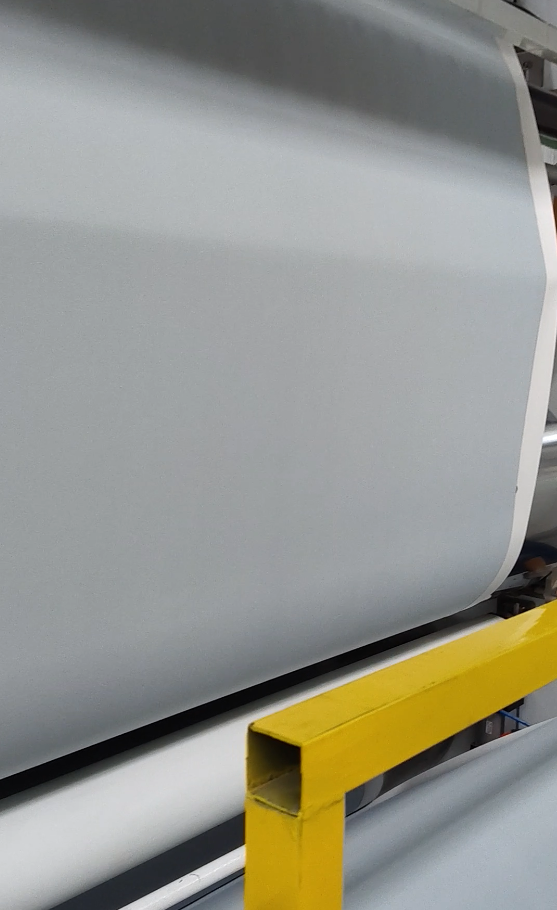
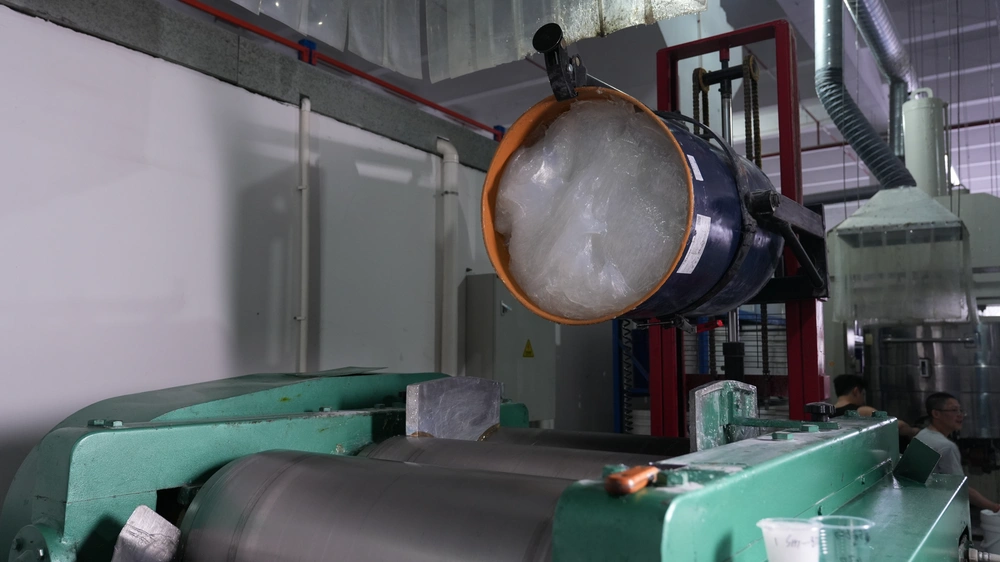
For manufacturers already producing PVC or PU synthetic leather, adding silicone leather does not always mean building a completely new production line.
In many cases, existing coating, release-paper handling, drying, laminating and winding equipment can still be used. However, silicone is not simply another PU or PVC resin. Its curing mechanism, mixing system, contamination sensitivity and bonding behavior are different.
Therefore, before changing materials, manufacturers need to evaluate both the existing equipment and the production process.
1. How Are PVC, PU and Silicone Leather Production Lines Different?
Although all three materials can be used to produce synthetic leather, their manufacturing principles are different.
| Item | PVC Leather | PU Leather | Silicone Leather |
|---|---|---|---|
| Main material | PVC plastisol/resin | Polyurethane resin | Liquid silicone rubber |
| Common process | Calendering or release-paper coating | Dry transfer coating / wet process | Release-paper coating and thermal curing |
| Film formation | Gelation / plasticization | Solvent or water evaporation / coagulation | Chemical crosslinking |
| Release paper | Optional depending on process | Common in dry-process PU | Common |
| Coating stations | Yes | Yes | Yes |
| Oven | Heating, drying, foaming or plasticizing | Mainly drying and curing | Mainly thermal curing |
| Fabric lamination | Common | Common | Common |
| Material mixing | PVC formulation mixing | PU resin preparation | Precise A/B mixing is often required |
PVC leather can be produced through either calendering or a release-paper casting process. In the casting process, PVC plastisol is coated onto release paper, heated to gel or foam, laminated with a textile backing and finally separated from the release paper.
Dry-process PU leather is structurally closer to silicone leather production. A typical PU dry line includes release-paper unwinding, coating, drying, additional coating stations, fabric lamination, separation and winding.
Silicone leather can also use a release-paper transfer structure: liquid silicone is coated layer by layer, thermally cured, laminated with a fabric substrate and then separated from the release paper.
This is why a dry-process PU leather line is usually much closer to a silicone leather line than a wet-process PU line or a PVC calendering line.
2. Which Existing Equipment Can Potentially Be Reused?
If your factory already has a PU dry-process or PVC release-paper coating line, a large part of the mechanical structure may remain useful.
Typical reusable sections may include:
- Release-paper unwinding and rewinding
- Coating stations
- Doctor-blade, comma-bar or roller coating systems
- Multi-zone ovens
- Cooling sections
- Base-fabric unwinding
- Lamination units
- Release-paper separation
- Finished-leather winding
- Web tension and speed-control systems
The key question is therefore usually not:
“Can my machine run silicone?”
but rather:
“Which parts of my existing line need to be modified for silicone?”
3. The Most Important Adjustments When Changing to Silicone Leather
A. Add a Suitable Silicone Mixing and Feeding System
Many silicone leather materials are two-component systems.
The A and B components must be mixed at the specified ratio before coating. Depending on the silicone system and production scale, the line may therefore require:
- Accurate A/B metering
- Mixing equipment
- Vacuum degassing
- Filtration
- Controlled material feeding
- Dedicated tanks, hoses and pumps
This is different from simply pumping a conventional PU resin or PVC plastisol into the coating head.
Incorrect mixing or poor degassing can result in bubbles, uneven curing or unstable coating quality.
B. Re-Evaluate the Oven — Silicone Needs Curing, Not Only Drying
This is one of the biggest differences.
A conventional PU oven is often designed primarily to evaporate solvents or water. PVC lines may use heat for gelation, foaming and plasticization.
Silicone, by contrast, normally forms its final elastomer structure through thermal crosslinking.
A solvent-free silicone leather production configuration, for example, can include separate coating, thermal-curing and cooling stages for surface, intermediate and bonding layers.
Therefore, when converting an existing line, manufacturers should check:
- Oven temperature range
- Temperature uniformity
- Effective heating length
- Actual residence time
- Line speed
- Airflow
- Heating from the top and/or bottom
- Temperature resistance of the release paper and substrate
Simply copying the existing PU or PVC oven settings is not recommended.
The correct curing conditions should be determined according to the specific silicone formulation, coating thickness, oven length and line speed.
C. Contamination Control Is Critical
This is one of the most frequently overlooked issues when a PU or PVC factory begins testing silicone.
Platinum-catalyzed addition-cure silicones can be inhibited by certain contaminants. Dow lists substances including amines/amides, sulfur-containing compounds and tin compounds as potential inhibitors.
This means residues from previous materials, additives, hoses, containers, release agents or cleaning processes may interfere with silicone curing.
Typical symptoms include:
- Sticky surface
- Partial curing
- Uncured areas
- Uneven hardness
- Poor interlayer bonding
For this reason, factories switching an existing production line should carefully clean and inspect:
- Coating heads
- Rollers
- Mixing tanks
- Pumps
- Pipes and hoses
- Scrapers
- Containers
- Tools
Where possible, the silicone mixing and feeding system should be dedicated to silicone production.
Using separate tools and thoroughly cleaning processing equipment is also commonly recommended when handling platinum-cured silicone to reduce cross-contamination risk.
D. Do Not Assume Your Existing Release Paper Will Work
PU, PVC and silicone can all use release paper, but that does not mean the same release paper is automatically suitable for all three materials.
The release coating itself must be compatible with the silicone curing system.
For example, Dow specifically identifies some tin-containing compounds, including those associated with certain release systems, as possible inhibitors of platinum-catalyzed silicone.
Before mass production, test:
Silicone + release paper + curing condition + peeling performance + surface pattern transfer.
A small compatibility trial can prevent much larger production losses.
4. Adhesion to the Base Fabric Must Be Tested Again
A manufacturer may already have excellent adhesion between PU and its textile backing.
That does not automatically mean silicone will achieve the same result.
Silicone requires a bonding layer formulated for both the silicone system and the selected substrate.
Depending on the product, the substrate may be:
- Polyester fabric
- Knitted fabric
- Microfiber
- Suede-like fabric
- Elastic fabric
- Other textile or synthetic backing materials
The bonding layer, lamination pressure, curing state and fabric surface all affect the final peel strength.
Therefore, when changing from PU or PVC to silicone leather, the base-fabric bonding system should be treated as a new formulation project rather than simply replacing the top resin.
5. PU/PVC Surface Treatments Cannot Simply Be Reused
The surface treatment system is another important difference.
PU and PVC finishing agents are designed around their respective polymer surfaces. Silicone has a very different surface chemistry.
If anti-stain, matte, gloss, abrasion resistance or special tactile properties are required, a silicone-compatible surface treatment should normally be selected.
Otherwise, manufacturers may experience:
- Poor surface adhesion
- Peeling
- Uneven gloss
- Insufficient abrasion resistance
- Poor stain resistance
6. Which Production Line Is Easiest to Convert?
As a general engineering assessment:
Dry-Process PU Line → Silicone Leather
Relatively easier
Because both can use:
Release paper → coating → heating → additional coating → lamination → separation → winding
A large part of the mechanical structure may therefore be retained.
PVC Release-Paper Coating Line → Silicone Leather
Possible, but requires process adjustment
The line architecture may be similar, but material feeding, curing conditions, contamination control and coating formulation need to be changed.
PVC Calendering Line → Silicone Leather
More difficult
A calendering process is fundamentally different from liquid-silicone coating, so additional coating and curing equipment may be required.
Wet-Process PU Line → Silicone Leather
Not a direct conversion
Wet PU production involves coagulation, washing and solvent-management stages that are not part of a typical silicone leather dry-coating process. PU wet-process manufacturing commonly uses a coagulation route rather than the release-paper thermal-curing route used for silicone.
7. Before Converting Your Line, Start With a Production Trial
For factories interested in entering silicone leather production, we normally recommend evaluating the existing line before making major equipment investments.
The most important information includes:
- Current leather type: PVC or PU
- Current production process: calendering, dry coating or wet process
- Number and type of coating stations
- Oven length and temperature range
- Production line speed
- Coating method
- Release paper currently used
- Base fabric type
- Target application: automotive, sofa, bags, footwear or other applications
- Required surface properties and leather thickness
Based on these parameters, the silicone formulation and production process can be matched to the existing equipment.
Thinking About Producing Silicone Leather?
If you currently manufacture PVC or PU synthetic leather and want to add silicone leather to your product range, you may not need to replace your entire production line.
However, the material system, curing process, contamination control, bonding layer and surface treatment all need to be evaluated carefully.
Chengyin Silicone can provide silicone materials for the surface layer, intermediate layer, bonding layer and surface treatment, together with laboratory testing and process recommendations based on your existing production line.
Send us your current machine configuration, oven parameters and target leather application, and our technical team can help evaluate a suitable silicone leather production process.