


Blog
Silicone Ink for Textile Screen Printing: How to Choose the Right Type for Your Fabric and Design

Silicone ink is widely used in textile screen printing for garments, underwear, sportswear, labels, gloves, socks, elastic tapes and other fabric products. Compared with traditional printing materials, silicone ink can provide a soft hand feel, good stretchability, strong washing resistance and a clean three-dimensional effect.
However, not every silicone ink is suitable for every fabric or design. Different fabrics, printing effects and production processes require different types of silicone ink. If the ink is not selected correctly, problems such as poor adhesion, cracking, sticky surface, uneven edges or weak washing resistance may appear after printing.
This article explains how to choose the right silicone ink for textile screen printing based on fabric type, design effect and production requirements.
What Is Silicone Ink for Textile Screen Printing?
Silicone ink is a liquid silicone material used for screen printing on fabric. After printing and heat curing, it forms a flexible silicone layer on the textile surface.
It is commonly used for:
- Garment logos
- Sportswear printing
- Underwear and lingerie printing
- Anti-slip patterns
- Elastic fabric decoration
- Heat transfer labels
- Socks, gloves and grip printing
- High-density 3D printing effects
For textile manufacturers, silicone ink is not only a printing material. It also affects the final product’s comfort, elasticity, durability and appearance.
Why More Manufacturers Use Silicone Ink on Fabric
Textile products today require higher performance and better wearing comfort. This is especially important for sportswear, underwear, yoga wear, children’s clothing and skin-contact textile products.
Silicone ink is often selected because it can offer the following advantages:
Soft and Comfortable Hand Feel
After curing, silicone ink can remain soft and flexible. This makes it suitable for garments that directly contact the skin, such as underwear, sportswear and elastic apparel.
Good Stretchability
For fabrics containing spandex, nylon or elastic fibers, the printed layer must stretch together with the fabric. A suitable silicone ink can reduce cracking and improve durability after repeated stretching.
Strong Washing Resistance
Garment printing must withstand washing, rubbing and daily use. Silicone ink can provide good adhesion and long-term performance when the correct product and curing process are used.
Clean 3D Printing Effect
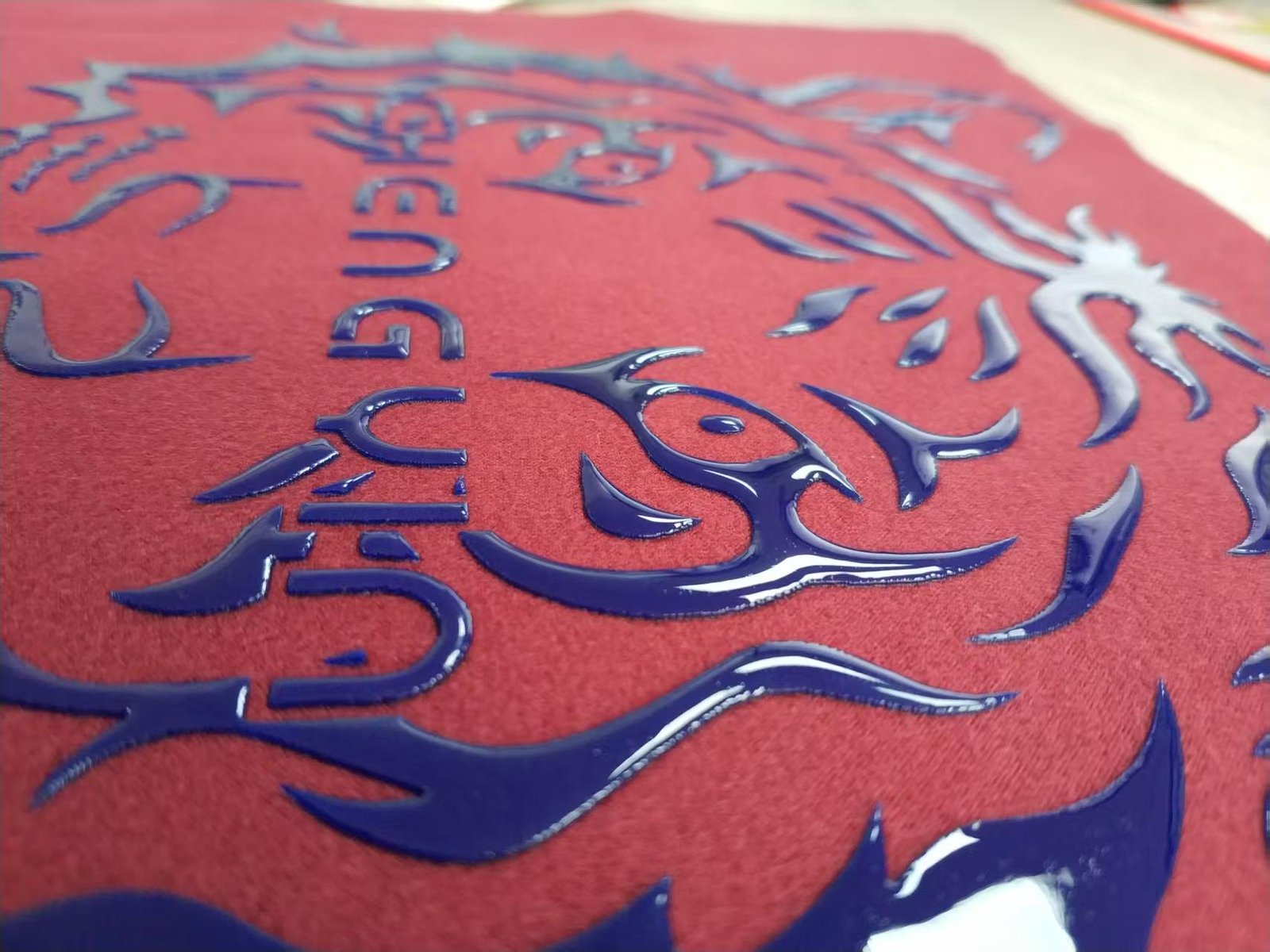
High density silicone ink can build thickness quickly and create raised logos or decorative patterns. This is useful for fashion garments, brand labels and premium textile products.
Suitable for Different Surface Effects
With different top coat materials, silicone printing can achieve glossy, matte, smooth or anti-slip surface effects.
Common Types of Silicone Ink for Textile Screen Printing
Choosing the right silicone ink starts with understanding the desired printing effect. Below are several common types used in textile screen printing.
1. High Density Silicone Ink
High density silicone ink is used when the design requires a thick, raised or three-dimensional effect.
It is suitable for:
- 3D garment logos
- Raised brand marks
- Sportswear decoration
- Fashion printing
- Thick silicone labels
- High-build screen printing
The main advantage of high density silicone ink is that it can build thickness with clear edges and stable structure. For designs that need a strong visual effect, this is usually the first choice.
When using high density silicone ink, manufacturers should pay attention to:
- Mesh selection
- Printing layers
- Curing temperature
- Adhesion to fabric
- Thickness control
- Surface smoothness
If the viscosity is too low, the printed pattern may collapse. If the viscosity is too high, it may be difficult to print smoothly. Therefore, choosing the right viscosity is very important.
2. Round Edge Silicone Ink
Round edge silicone ink is designed for patterns that require smooth and soft edges. Compared with sharp-edged high density printing, round edge silicone ink creates a more natural and refined look.
It is suitable for:
- Soft 3D logos
- Underwear logos
- Children’s clothing
- Fashion labels
- Elastic garment printing
- Premium textile decoration
The key feature of round edge silicone ink is its leveling performance. It helps the printed edge become rounder and smoother after curing.
This type of silicone ink is useful when the customer wants a high-quality logo effect without a hard or rough edge.
3. Glossy Silicone Top Coat
Glossy silicone top coat is usually applied as the final layer of silicone printing. It gives the printed surface a bright, transparent and glossy finish.
It is suitable for:
- Glossy logo effects
- Transparent surface protection
- Anti-slip printing
- Decorative garment patterns
- Fashion textile printing
A good glossy top coat should have stable transparency, good leveling and strong bonding with the base silicone layer.
If the top coat is not compatible with the base ink, the surface may become uneven, sticky or easy to peel off. Therefore, the base ink and top coat should be tested together before mass production.
4. Matte Silicone Top Coat
Matte silicone top coat is used when the design requires a soft, low-gloss and premium appearance.
It is suitable for:
- High-end garment logos
- Underwear printing
- Sportswear labels
- Soft-touch printing
- Minimalist fashion designs
Compared with glossy top coat, matte top coat gives the printed surface a more subtle and elegant finish. It is often used for brands that prefer a clean and refined look.
The key points for matte top coat are:
- Uniform matte effect
- Smooth hand feel
- No surface stickiness
- Good washing resistance
- Stable bonding with the printed layer
How to Choose Silicone Ink Based on Fabric Type
Different fabrics have different surface structures, elasticity and heat resistance. Before choosing silicone ink, it is necessary to understand the fabric clearly.
Cotton Fabric
Cotton fabric usually has good absorbency and surface texture. For cotton garments, adhesion and washing resistance are important.
Recommended focus:
- Good fabric adhesion
- Soft hand feel
- Stable curing
- Washing resistance
High density silicone ink and standard silicone printing ink can both be used depending on the design effect.
Polyester Fabric
Polyester is widely used in sportswear and functional garments. It usually requires good bonding and stable curing performance.
Recommended focus:
- Adhesion to synthetic fibers
- Stretching resistance
- Color stability
- Heat resistance during curing
For polyester sportswear, silicone ink with good elasticity is usually preferred.
Nylon Fabric
Nylon is common in underwear, swimwear, sportswear and elastic garments. It can be more difficult to bond than cotton, so adhesion testing is very important.
Recommended focus:
- Strong adhesion
- Soft hand feel
- Stretchability
- Low surface stickiness
For nylon and spandex blends, the printed silicone layer must stretch without cracking.
Spandex and Elastic Fabric
Elastic fabric is one of the most demanding materials for silicone printing. The printed layer must follow the fabric movement during stretching, wearing and washing.
Recommended focus:
- High elasticity
- Crack resistance
- Strong bonding
- Soft and flexible cured layer
For underwear, yoga wear and sportswear, silicone ink should be tested under stretching and washing conditions before bulk production.
Common Problems When Using Silicone Ink
Even when the printing process looks simple, many problems can happen during production. Most of them are related to material selection, curing conditions or fabric compatibility.
Poor Adhesion
Poor adhesion may happen when the silicone ink does not match the fabric, or when the curing temperature is not enough.
Possible causes:
- Fabric surface contamination
- Wrong silicone ink type
- Insufficient curing
- Incompatible base material
- Poor process control
Before mass production, adhesion testing should always be done on the actual fabric.
Cracking After Stretching
This usually happens on elastic fabrics. If the printed silicone layer is too hard or lacks elasticity, it may crack when the fabric is stretched.
Possible solutions:
- Use more elastic silicone ink
- Reduce excessive printing thickness
- Adjust curing conditions
- Test the ink on stretched fabric
Sticky Surface After Curing
A sticky surface may be caused by incomplete curing, wrong mixing ratio or unsuitable curing temperature.
Possible solutions:
- Check curing temperature and time
- Confirm the correct mixing ratio
- Improve heat distribution
- Avoid contamination during printing
- Use a suitable top coat
Uneven Printing Surface
Uneven surface may come from ink viscosity, mesh selection, squeegee pressure or poor leveling.
Possible solutions:
- Adjust ink viscosity
- Choose suitable screen mesh
- Control printing pressure
- Use silicone ink with better leveling
- Keep the working environment clean
Weak Washing Resistance
If the printed pattern peels off or becomes damaged after washing, it means the adhesion or curing process needs improvement.
Possible solutions:
- Test fabric compatibility
- Improve curing conditions
- Use a suitable primer or base layer if needed
- Select silicone ink with stronger bonding performance
Why Material Selection Matters
For textile screen printing manufacturers, silicone ink quality directly affects production stability and final product quality.
A suitable silicone ink should provide:
- Stable viscosity
- Good printability
- Strong fabric adhesion
- Smooth surface effect
- Good elasticity
- Reliable curing performance
- Consistent batch quality
In real production, the same silicone ink may perform differently on different fabrics. That is why sample testing is necessary before bulk orders.
Manufacturers should provide fabric information, design requirements and production conditions to the silicone supplier. This helps the supplier recommend a more suitable material.
What Information Should You Provide Before Choosing Silicone Ink?
To choose the right silicone ink, it is helpful to provide the following details:
- Fabric type
- Fabric composition
- Fabric weight
- Printing design
- Required thickness
- Glossy or matte surface
- Stretching requirements
- Washing test requirements
- Current production problem
- Curing equipment and temperature
With this information, the silicone supplier can give more accurate recommendations and reduce trial-and-error cost.
Chengyin Silicone Solution for Textile Screen Printing
Dongguan Chengyin Silicone Tech Co., Ltd. provides liquid silicone materials for textile screen printing applications. Our silicone materials are used for garment printing, underwear printing, sportswear logos, anti-slip patterns, elastic fabric printing and silicone label effects.
Our textile screen printing silicone range includes:
- High Density Silicone Ink
- Round Edge Silicone Ink
- Glossy Silicone Top Coat
- Matte Silicone Top Coat
- Silicone materials for elastic fabric printing
- Silicone materials for anti-slip printing
We support sample testing and technical communication based on your fabric, design and production process. If you are not sure which silicone ink is suitable for your application, our team can help evaluate your requirements and recommend a suitable product direction.
Looking for Silicone Ink for Textile Screen Printing?
Choosing the right silicone ink can improve printing quality, reduce production problems and make the final textile product more stable and comfortable.
If you are developing garment logos, underwear printing, sportswear designs, anti-slip patterns or high-density silicone printing effects, Chengyin Silicone can provide silicone ink materials for testing.
Contact us to discuss your fabric, printing design and production requirements. We can provide samples and technical support for your silicone screen printing project.