


Blog
Why Does Silicone Leather Become Sticky After Abrasion?

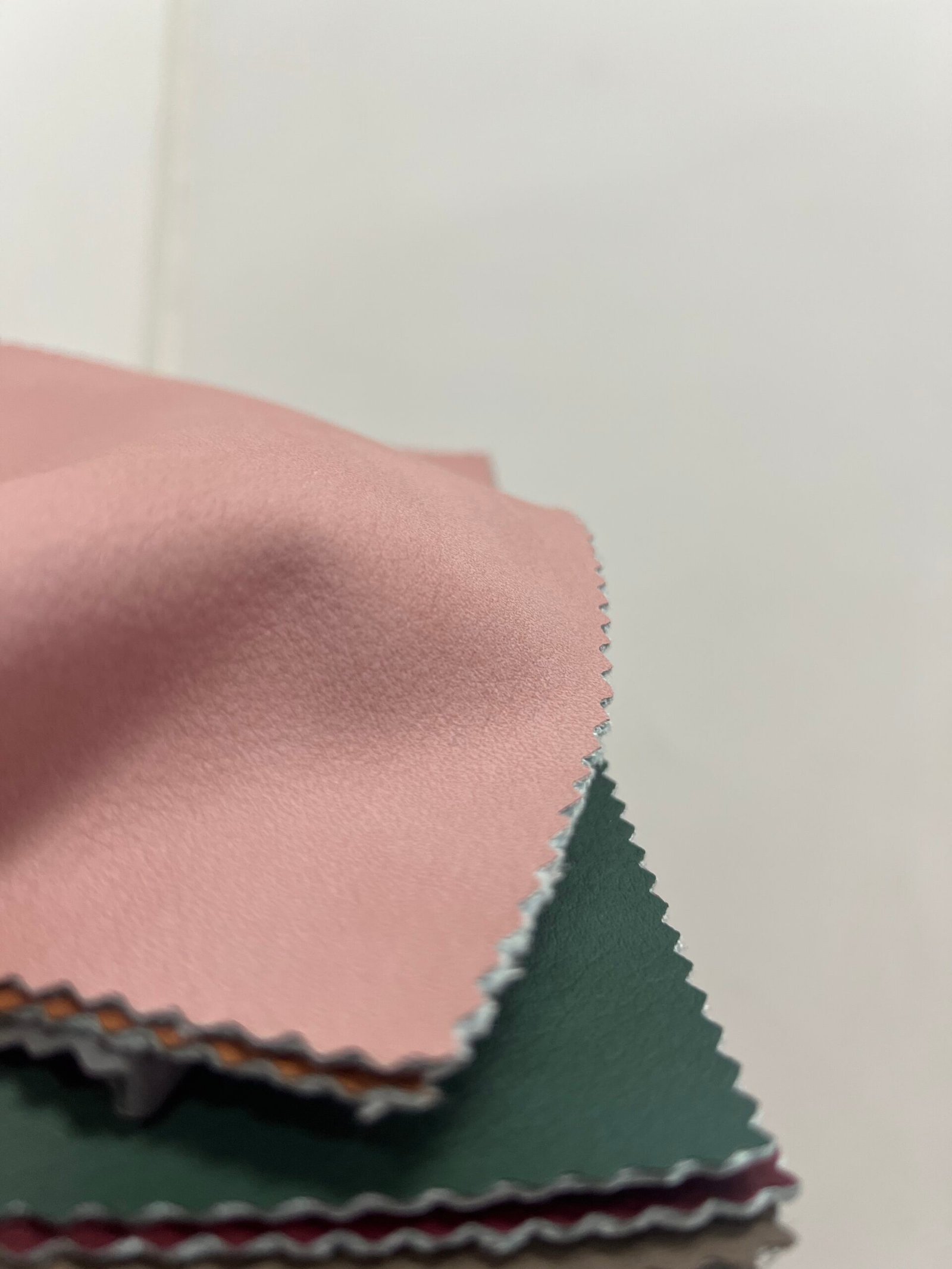
Silicone leather is widely used in applications where soft touch, flexibility and surface durability are important.
However, during long-term use or abrasion testing, manufacturers may encounter a problem:
The original surface feels smooth, but after the top layer is worn, the exposed area starts to feel sticky or tacky. Why does this happen?
The answer is not always the surface treatment itself.
In many cases, the problem is related to the coating structure, middle silicone layer, curing conditions and the degree of surface wear.
1. Understanding the Structure of Silicone Leather
A typical silicone leather coating system may contain several layers:
Surface Treatment
↓
Top Silicone Layer
↓
Middle Silicone Layer
↓
Base Silicone Layer
↓
Fabric / Substrate
Each layer has a different function.
The top layer provides the main surface appearance and physical properties, while the middle and base layers contribute to properties such as flexibility, thickness and bonding with the substrate.
During normal use, the user mainly contacts the surface treatment and top silicone layer.
But after repeated friction or abrasion, the upper layers may gradually wear away and expose the material underneath.
This is when differences in silicone formulation become more noticeable.
2. Why Can the Surface Become Sticky After Abrasion?
There are several possible reasons.
The Middle Layer Is Naturally More Tacky
Some silicone formulations used for the middle layer are designed primarily for flexibility and interlayer bonding rather than surface touch.
When they are completely covered by the top layer, this is usually not a problem.
However, after the top silicone layer is worn through, the exposed middle layer may have a noticeably tackier surface.
Therefore, what appears to be a “surface treatment failure” may actually be related to the properties of the silicone underneath.
Insufficient Curing
Curing conditions are also important.
If the silicone is not fully cured, the coating may show:
- Higher surface tackiness
- Lower mechanical strength
- Poorer abrasion resistance
- Unstable interlayer performance
The appropriate curing temperature and time depend on the silicone formulation and coating thickness.
Simply increasing temperature is not always the correct solution. The complete coating system should be tested under actual production conditions.
Surface Treatment Has Been Worn Away
Surface treatment helps provide the desired hand feel and surface performance.
After repeated abrasion, this very thin surface layer can gradually be damaged.
Once the underlying silicone is exposed, the touch may change significantly.
Therefore, abrasion resistance should not only be evaluated by checking whether the color or appearance has changed. The hand feel of the exposed layer is also important.
3. Why Is the Middle Silicone Layer Important?
When developing silicone leather, manufacturers often focus heavily on the top coat because it directly determines appearance and touch.
However, the middle silicone layer can also affect long-term performance.
If the top layer is damaged during long-term use, the middle layer becomes part of the exposed surface.
For applications requiring higher abrasion performance, selecting a middle-layer silicone with lower residual tack after exposure can help maintain a more stable hand feel after surface wear.
This is especially relevant for products that experience frequent contact and friction, such as:
automotive seats, sofa upholstery and other high-contact interior surfaces.
4. A Silicone System Designed for Better Performance After Wear
At Chengyin Silicone, we provide different silicone materials for base, middle and top coating applications.
For applications where tackiness after abrasion is a concern, CYS-1160B-6S can be used as a middle-layer silicone option.
One of its characteristics is that when the upper coating is worn or damaged, the exposed middle layer is designed to maintain a relatively dry touch and reduce the risk of obvious tackiness.
A typical material combination can include:
| Layer | Recommended Material |
|---|---|
| Surface Treatment | BC-10G-4 |
| Top Silicone Layer | CYS-1580B-1 |
| Middle Silicone Layer | CYS-1160B-6S |
| Base Silicone Layer | CYS-1145B-6 |
| Curing Agent | CYS-500-8 |
The final performance still depends on factors such as coating thickness, curing conditions, substrate, production equipment and the customer’s required abrasion standard.
For this reason, laboratory testing should be completed before mass production.
5. How Should You Evaluate This Problem?
If your silicone leather becomes sticky after abrasion, do not only replace the surface treatment agent.
First, identify which layer has actually been exposed after abrasion.
Then check:
- Whether the top layer thickness is sufficient
- Whether the silicone is fully cured
- Whether the middle layer itself has a tacky surface
- Whether the surface treatment is compatible with the top silicone
- Whether the complete coating structure meets the required abrasion conditions
This makes it easier to identify whether the problem comes from the surface treatment, top layer, middle layer or curing process.
Testing Silicone Leather for Automotive or Sofa Applications?
If you are experiencing surface tackiness after abrasion, send us information about your current coating structure, silicone layers, curing conditions and target abrasion requirements.
The technical team at Chengyin Silicone can recommend a suitable base, middle, top and surface treatment system for laboratory testing.
Samples are available for evaluation before mass production.