


Blog
Silicone Adhesive for Medical Dressings: A Practical Guide for Wound Care Brands

Why Soft Silicone Is Used in Medical Dressings
For wound care brands, the adhesive layer directly affects how a dressing interacts with the patient’s skin.
Soft silicone adhesive technology is already used in commercial wound dressings, foam dressings and wound contact layers. One important reason is its ability to provide secure skin contact while allowing gentler removal from the surrounding skin.
This is particularly relevant for products designed for sensitive or fragile skin, where repeated dressing changes may increase the risk of skin damage.
For brands developing new wound care products, selecting the right silicone adhesive for medical dressings is therefore not simply a question of adhesion strength. The adhesive also needs to match the dressing structure, backing material, coating process and intended wear conditions.
Where Can Silicone Adhesive Be Used?
Silicone adhesive can be incorporated into several types of medical and skin-contact products, including:
- Foam wound dressings
- Wound contact layers
- Medical fixation tapes
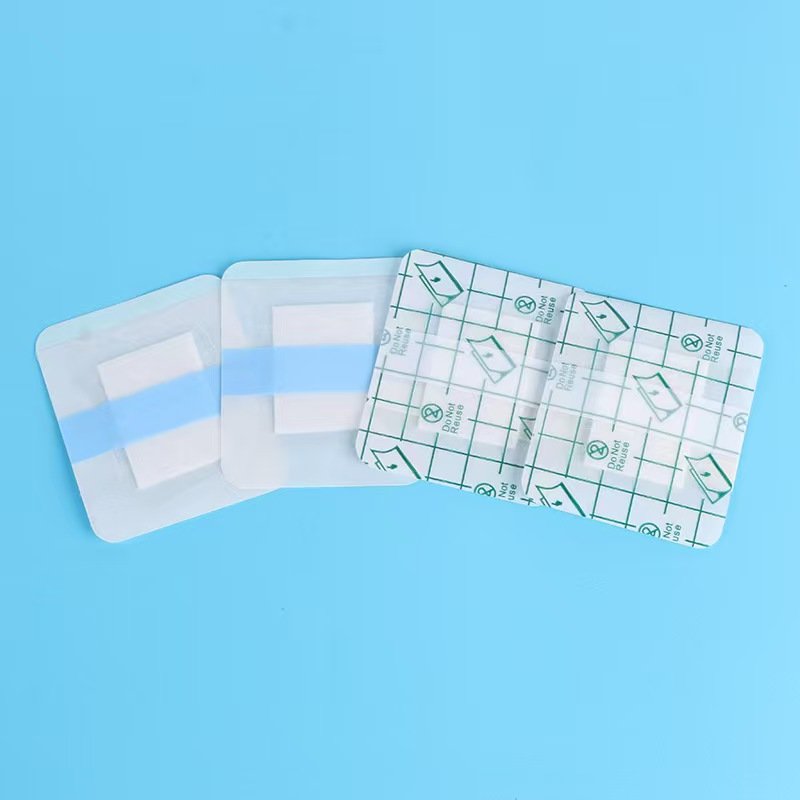
- Skin-contact adhesive patches
- Scar care sheets
- PU or TPU film dressings
- Nonwoven medical dressings
Different products require different adhesive characteristics.
For example, a foam dressing may require reliable adhesion around the wound area while maintaining flexibility. A thin film dressing may require a more uniform coating and carefully controlled adhesive thickness. Scar care products may require a soft, conformable silicone layer suitable for extended skin contact.
There is therefore no single silicone formulation that is ideal for every medical dressing.
What Should Brands Consider When Choosing a Silicone Adhesive?
When evaluating a silicone adhesive, we recommend looking beyond basic tack.
1. Adhesion Level
The adhesive should provide enough fixation for the intended application without creating unnecessary removal force.
Depending on the product design, adhesion can be adjusted to achieve a balance between secure fixation and gentle removal.
2. Substrate Compatibility
Medical dressings may contain PU film, TPU film, nonwoven fabric, foam or release liner materials.
The silicone formulation and processing conditions need to be evaluated together with the actual substrate.
3. Coating Method
The production process also affects silicone selection.
Common approaches include:
- Direct coating
- Transfer coating
- Knife or bar coating
- Roll-to-roll coating
For transfer coating, anchoring between the silicone layer and the final substrate is especially important and should be evaluated under the customer’s actual production conditions.
4. Viscosity and Coating Thickness
Different coating equipment requires different flow properties.
Viscosity, leveling behavior and coating thickness can therefore be adjusted according to the production line and target dressing structure.
5. Curing Conditions
Temperature and curing time directly affect production efficiency.
Before recommending a silicone system, it is useful to understand the customer’s existing oven type, production speed, coating thickness and substrate temperature resistance.
Custom Silicone Solutions for Your Dressing Structure
At Dongguan Chengyin Silicone Tech, we develop liquid silicone solutions for different skin-contact and medical dressing applications.
Instead of recommending one standard material for every project, we can adjust properties according to the customer’s actual product structure and manufacturing process, including:
- Adhesion
- Softness
- Transparency
- Viscosity
- Flow behavior
- Coating performance
Our silicone materials can be evaluated for applications involving PU film, TPU film, foam, nonwoven substrates and release materials, using either direct coating or transfer coating processes depending on the project requirements.
With more than 10 years of experience in liquid silicone development, our factory and laboratory can also support formulation adjustment based on customer samples and production conditions.
Developing a New Medical Dressing?
If your company is developing or upgrading a wound dressing, medical tape, skin-contact patch or scar care product, the best silicone adhesive should be selected according to the complete product structure—not just a technical data sheet.
To recommend a suitable silicone, simply send us:
- Your dressing structure
- Substrate material
- Target coating thickness
- Current coating method
- Required adhesion level
- Curing equipment and temperature
Our team can review your application and prepare free silicone samples for evaluation.
Looking for a silicone adhesive for your next medical dressing project?
Contact Chengyin Silicone to discuss your product structure and request samples for testing.