


Blog
How Is Silicone Leather Made? A Step-by-Step Manufacturing Guide

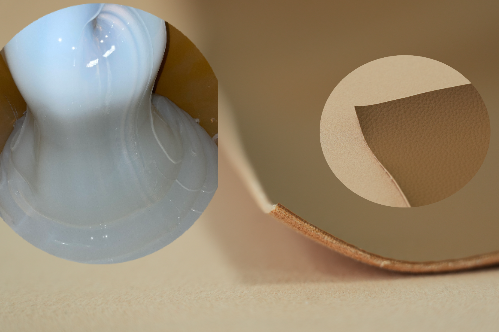
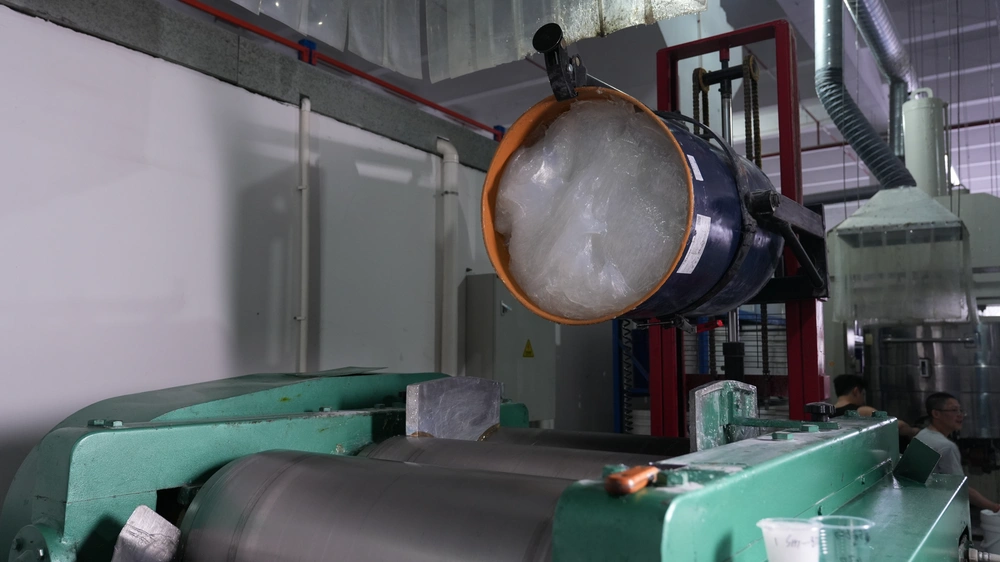
Silicone leather is a high-performance coated material made by applying multiple layers of liquid silicone onto release paper and combining them with a suitable fabric backing.
Unlike a single-layer coating, silicone leather normally requires several silicone layers. Each layer performs a different function, including forming the surface texture, providing color, building thickness, and improving bonding strength.
So, how does liquid silicone become finished silicone leather?
This article explains the silicone leather manufacturing process step by step.
What Is Silicone Leather?
Silicone leather is a type of synthetic leather that uses silicone as its main surface coating material.
Its structure normally includes:
- A silicone top coat
- A silicone middle coat
- A silicone base coat
- A textile or fabric backing
- An optional surface-treatment layer
The formulation and coating method may vary depending on the required texture, softness, color, thickness, adhesion, and end-use application.
Silicone leather can be used in products such as:
- Furniture and upholstery
- Automotive interiors
- Bags and accessories
- Shoes
- Electronic product covers
- Medical and healthcare products
- Interior decoration materials
The final performance depends not only on the silicone formulation but also on the coating thickness, curing temperature, release paper, fabric backing, and processing conditions.
Step 1: Apply the Silicone Top Coat
The first layer is the silicone top coat, also called the surface coat.
This layer directly determines the appearance of the finished silicone leather, including:
- Surface texture
- Color
- Gloss level
- Touch and hand feel
- Surface uniformity
Before coating, a suitable amount of pigment is added to the top-coat silicone according to the required color.
The silicone mixture should then be thoroughly mixed and vacuum-degassed. Vacuum treatment helps remove air bubbles introduced during mixing, reducing pinholes and surface defects in the finished leather.
After degassing, a thin layer of silicone is applied evenly onto textured release paper.
A No. 0 coating bar can be used for this thin surface layer, depending on the required coating thickness and equipment.
The coated material is then pre-cured at approximately:
120–130°C for 3–5 minutes
This curing step helps stabilize the surface layer before the next silicone layer is applied.
Why Is Release Paper Important?
Release paper transfers its surface pattern to the silicone coating.
Different release papers can create different leather effects, such as:
- Fine-grain leather texture
- Smooth surface
- Matte texture
- Fabric-like pattern
- Natural leather grain
The texture seen on the finished silicone leather is therefore formed during the first coating step.
Step 2: Apply the Silicone Middle Coat
After the top coat has been partially or fully cured, the silicone middle layer is applied.
The middle coat mainly helps:
- Build the thickness of the leather
- Improve softness and flexibility
- Support the surface layer
- Adjust the overall hand feel
- Improve the physical structure of the coating
Pigment and curing agent are added according to the formulation requirements.
Normally, the middle-coat silicone does not need to be diluted. Excessive dilution may affect coating stability, thickness, curing behavior, and final mechanical performance.
After mixing, the material should also be vacuum-degassed to remove trapped air.
A No. 15 coating bar can be used to apply the middle layer, although the exact coating bar should be selected according to the target thickness and production conditions.
The thickness of the middle layer can be adjusted based on the required product structure.
For example, furniture upholstery may require a different softness and thickness compared with silicone leather used for bags or electronic accessories.
Step 3: Apply the Silicone Base Coat
The third layer is the silicone base coat.
The base coat plays an important role in bonding the silicone coating to the fabric backing.
Unlike the top and middle layers, pigment is normally not added to the base-coat silicone.
Adding unnecessary pigment or additives may influence the bonding performance between the silicone layer and the substrate.
The main functions of the base coat include:
- Improving adhesion to the backing fabric
- Connecting the silicone coating with the textile substrate
- Increasing structural stability
- Reducing the risk of delamination
- Supporting long-term durability
A No. 15–20 coating bar can be used, depending on the required coating weight and bonding structure.
After the base coat is applied, the fabric backing is laminated onto the wet or semi-cured silicone layer according to the production process.
The material is then cured under suitable temperature and time conditions.
Step 4: Optional Surface Treatment
Some silicone leather products require an additional surface-treatment layer.
This step is optional and depends on the customer’s performance and appearance requirements.
Surface treatment may be used to adjust properties such as:
- Surface gloss
- Matte effect
- Smoothness
- Touch
- Abrasion resistance
- Stain resistance
- Surface friction
- Release performance
Not every silicone leather product needs this fourth coating step.
For standard products, the top coat, middle coat, and base coat may already provide the required appearance and performance.
For special applications, a suitable silicone surface-treatment material can be selected according to the intended use.
Step 5: Final Curing and Peeling
After all required layers have been coated and the backing fabric has been laminated, the silicone leather must be fully cured.
Proper curing is critical because insufficient curing may cause:
- A sticky surface
- Weak layer bonding
- Poor mechanical strength
- Unstable color or gloss
- Residual odor
- Surface deformation
- Delamination during use
The required curing temperature and time depend on the silicone formulation, coating thickness, equipment, and production speed.
Once curing is complete, the finished silicone leather is peeled away from the release paper.
The surface pattern of the release paper is transferred to the silicone surface, forming the final leather texture.
The material can then be inspected, rolled, cut, and prepared for further processing.
The Function of Each Silicone Layer
| Silicone layer | Main function |
|---|---|
| Top coat | Creates the surface texture, color, gloss, and touch |
| Middle coat | Builds thickness, softness, and structural performance |
| Base coat | Bonds the silicone coating to the fabric backing |
| Surface treatment | Adjusts gloss, touch, friction, and surface performance |
Although these layers are coated separately, they must work together as one complete system.
Using incompatible silicone materials may result in poor interlayer adhesion, uneven curing, cracking, peeling, or unstable surface performance.
For this reason, manufacturers should test the complete silicone coating system instead of evaluating only one layer.
Key Factors in Silicone Leather Production
1. Mixing Ratio
The silicone and curing agent must be mixed according to the recommended ratio.
An incorrect ratio may cause incomplete curing, reduced operation time, or unstable product performance.
2. Vacuum Degassing
Air bubbles can affect both the appearance and physical properties of silicone leather.
Vacuum degassing is especially important after adding pigment or curing agent.
3. Coating Thickness
Each layer should be applied evenly.
An excessively thin coating may not provide sufficient coverage, while an excessively thick coating may increase curing time and cause bubbles or unevenness.
4. Curing Conditions
Temperature and curing time must match the silicone formulation.
The actual material temperature should also be considered, rather than relying only on the oven display temperature.
5. Release Paper Selection
Release paper determines the final surface texture and can also affect peeling performance.
It should be compatible with the silicone coating and curing temperature.
6. Fabric Backing
Different fabrics have different surface structures, heat resistance, and bonding properties.
Testing is required before mass production to confirm adhesion between the silicone base coat and the selected substrate.
Common Problems During Silicone Leather Manufacturing
Air Bubbles
Air bubbles are often caused by insufficient degassing, fast mixing, excessive coating thickness, or trapped air between layers.
Uneven Surface
An uneven surface may be related to silicone viscosity, coating speed, coating-bar selection, release paper flatness, or incomplete leveling.
Weak Adhesion
Poor bonding may result from an unsuitable base coat, contaminated fabric, incorrect curing conditions, or additives that interfere with adhesion.
Incomplete Curing
A sticky or soft surface may indicate insufficient temperature, insufficient curing time, or an incorrect curing-agent ratio.
Color Difference
Color variation can be caused by inaccurate pigment dosage, incomplete mixing, uneven coating thickness, or differences between production batches.
Choosing Liquid Silicone for Silicone Leather
A complete silicone leather system should be selected according to the final product requirements.
Before recommending a material, the silicone supplier should understand:
- Required surface texture
- Target color
- Matte or glossy finish
- Required thickness
- Fabric-backing type
- Softness requirement
- Coating equipment
- Curing temperature
- Production speed
- Final application
Small-scale testing should be completed before mass production.
Testing the top coat, middle coat, base coat, release paper, and fabric backing together helps confirm whether the entire production system is compatible.
Liquid Silicone Solutions for Silicone Leather Production
Chengyin Silicone provides liquid silicone materials for different layers of silicone leather production, including:
- Silicone top-coat materials
- Silicone middle-coat materials
- Silicone base-coat materials
- Silicone surface-treatment materials
- Customized color and performance solutions
Our technical team can assist with material selection, coating tests, curing conditions, and production-process adjustment.
For silicone leather manufacturers, selecting the correct silicone for each layer is essential for achieving stable texture, adhesion, softness, and durability.
Looking for liquid silicone materials for silicone leather production? Contact Chengyin Silicone for product information, samples, and technical support.
Contact us:
Website: www.cysiltech.com
Email: nicole@cysiltech.com
WhatsApp: +86 135 3832 6617
Chengyin Silicone — Liquid Silicone Solutions for Silicone Leather Manufacturing